Cognitive Intelligence in Surveillance Systems: From Monitoring to Understanding
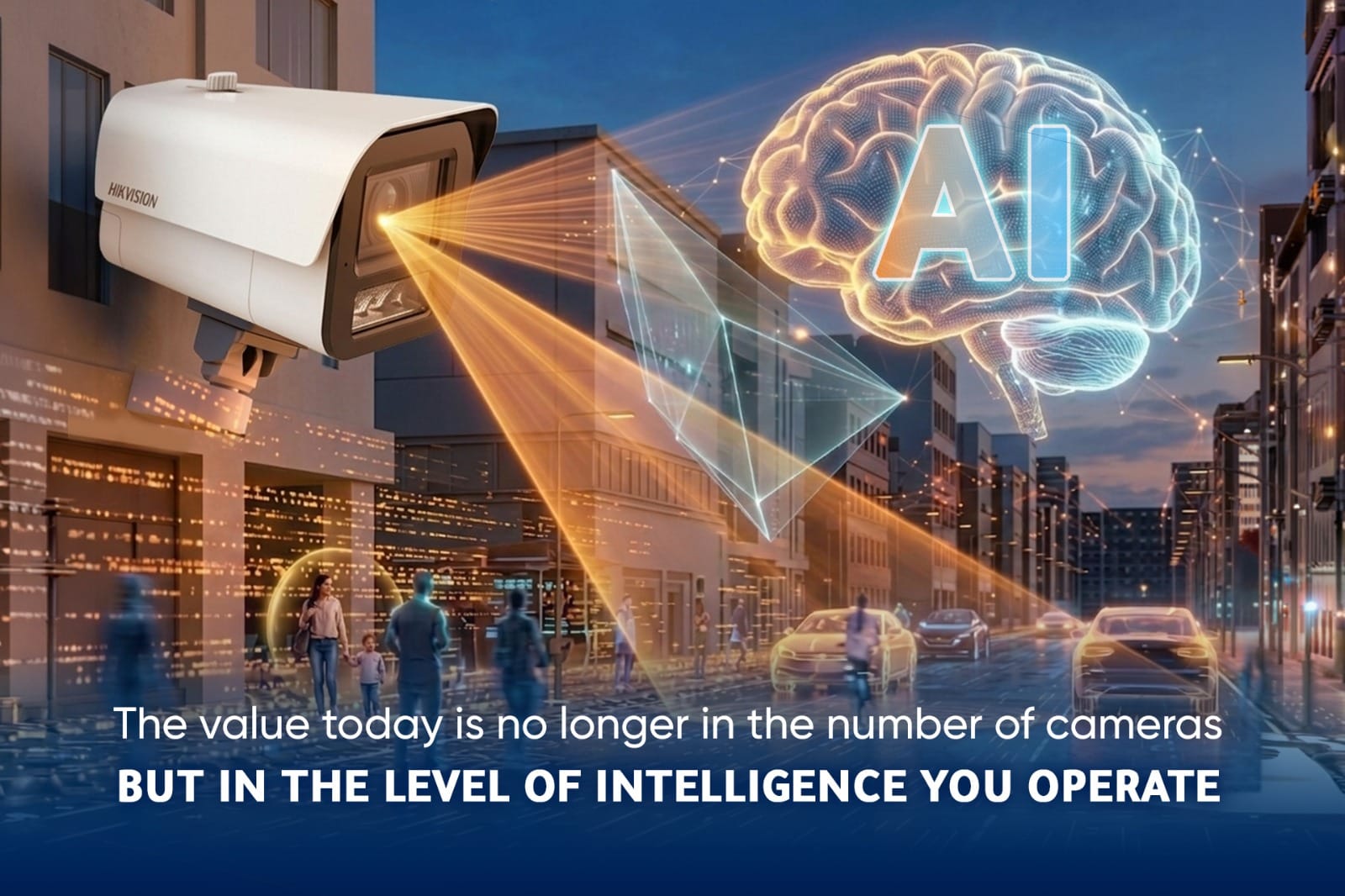
Today, value is no longer defined by the number of cameras deployed, but by the level of intelligence managing them. Artificial intelligence has evolved beyond being just a data analysis tool. it has become an active partner in decision-making.
What we now call cognitive intelligence is no longer a theoretical concept. It is actively shaping real-world operations across industries. The shift is no longer about how much a system can see, but how well it can understand what it sees.
We are moving from systems that merely observe to systems that interpret, analyze, and predict. Surveillance is no longer just about monitoring, t is about intelligence.
In recent years, modern systems have gone beyond recording events. They now analyze behaviors, detect anomalies, and provide decision-makers with timely and actionable insights. This shift allows businesses to move from reactive to proactive operations.
Companies that adopted this transformation early, such as Hikvision, are no longer offering just security solutions. They are delivering intelligent ecosystems that enhance operational efficiency and support business performance.
In markets like Egypt, the challenge is no longer installing a functioning system—it is selecting one that truly understands and adds value.
One of the most common mistakes is treating security systems as products to purchase rather than strategic investments. In reality, these systems directly impact operational efficiency and risk management.
For example, in a manufacturing environment, traditional systems may only record incidents after they occur. In contrast, systems powered by cognitive intelligence can detect unsafe behaviors before they escalate into real accidents.
This marks a fundamental shift, from monitoring events to understanding them, and from documenting the past to predicting the future.
Industry Impact of Cognitive Intelligence
The impact of artificial intelligence is no longer theoretical—it is actively transforming entire industries:
- Manufacturing: Intelligent systems improve operational efficiency, reduce errors, and predict equipment failures before they happen.
- Retail: Visual data is used to analyze customer behavior and enhance the shopping experience.
- Smart Cities: Integrated systems support traffic management, improve public safety, and create more responsive urban environments.
The Ethical Dimension
As technology evolves, a deeper question emerges: Just because we can implement something—does it mean we should?
Ethics is now a core part of technological advancement. Issues such as privacy, algorithm transparency, and responsible data usage are no longer optional, they are essential.
At the same time, education is evolving. Degrees alone are no longer sufficient. Skills—especially those related to data interpretation and intelligent systems are becoming the true currency in a rapidly changing job market.
Tech for Good: More Than a Concept
The concept of “Tech for Good” is no longer just a slogan. The real challenge is not owning technology, but directing it responsibly.
Technology is power—but it is also responsibility.
The companies that will lead the future are not only those that are technologically advanced, but those that are conscious of their impact. They are the ones capable of balancing innovation with values, and efficiency with human considerations.
From this perspective, companies like Hikvision are aligning innovation with real-world impact—using technology to build safer, more efficient environments.
A Market in Transition
In Egypt, the market is clearly shifting. Customers are no longer looking for standalone products—they are seeking integrated solutions that deliver measurable value.
Challenges are no longer purely security-related. They are operational—focused on efficiency, loss reduction, and faster decision-making.
The difference is now clear:
- A system that monitors
vs. - A system that understands
True transformation does not begin with adopting newer technology—it begins with changing how we think about its role.
Traditional systems tell you what happened.
Intelligent systems tell you why it happened—and what will likely happen next.
Conclusion
The market is no longer searching for cameras. It is searching for systems that understand, analyze, and predict.
The real question is no longer where technology is heading, but how we choose to use it.
The future will not belong to those who simply possess technology, but to those who use it wisely, responsibly, and with purpose. creating real value that goes beyond devices into measurable impact.