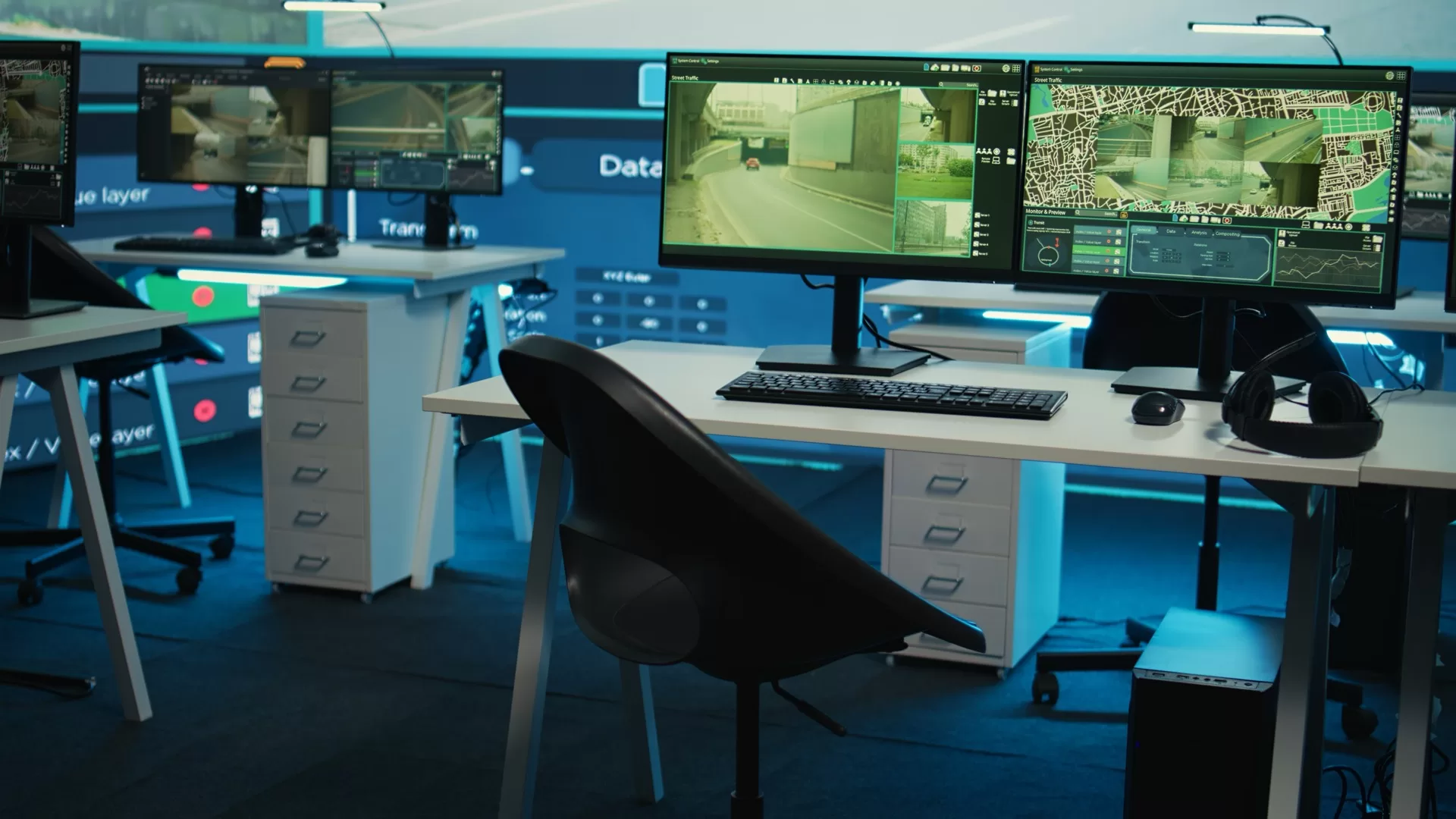

Corporate security has moved a long way past cameras that only record. AI surveillance systems do not merely store what happened — they read the scene while it is happening, separate a person from an animal from a plastic bag moving in the wind, and raise an alert in time for someone to act on it. For a facility manager, that is the difference between footage reviewed after an incident and a notification received during one.
This article covers what that actually means in a corporate environment: what the AI is doing, what changes operationally, where it earns its cost back — and, just as importantly, what it does not fix.
What “AI” actually means inside a camera
Older motion detection worked on pixels. If enough pixels changed between two frames, it triggered. That is why a tree in the wind, a cat, rain on the lens, or headlights sweeping a wall all produced alarms, and why most sites eventually switched motion alerts off entirely.
Modern analytics classify objects instead of counting pixels. The camera decides whether the thing that moved is a person, a vehicle, or neither, and only then applies the rule — crossed this line, entered this zone, loitered for this long. The processing can sit in three places, and the difference matters commercially:
- On the camera (at the edge). No extra hardware, no extra network load, and the classification survives a network outage. This is where most corporate deployments should start.
- On the recorder. Lets older cameras gain analytics, and concentrates the licensing in one device — but the recorder’s processing capacity becomes the ceiling for the whole site.
- On a server or platform. Needed for the heavier work — face or plate matching against a database, cross-camera search, multi-site dashboards.
What changes operationally
| Task | Traditional system | With AI surveillance systems |
|---|---|---|
| Perimeter at night | Motion alarms on every animal and shadow, so alerts get ignored | Alerts only on human or vehicle intrusion, so alerts get read |
| Finding an incident | Scrubbing hours of timeline manually | Filtered search by object type, time window, colour or direction |
| Staff response | Reactive — reviewed after a report | Proactive — notified while the event is in progress |
| Storage | Continuous recording on every channel | Event-driven retention on low-risk zones, continuous where it matters |
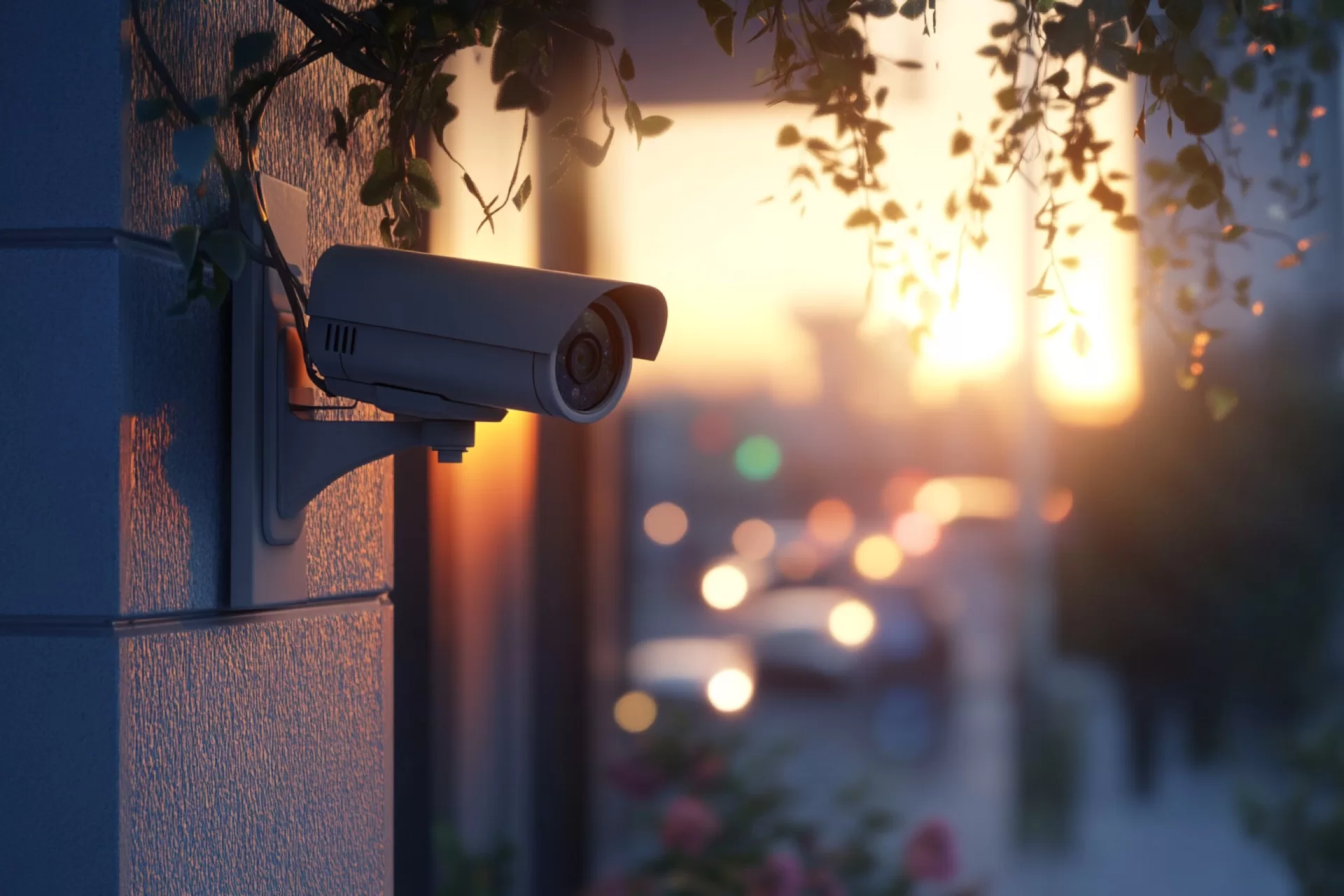
| Operator load | One person watching many screens, badly | One person handling a short queue of classified events |
The quietest benefit in that table is the last one. Human attention on a video wall degrades within about twenty minutes. A system that produces ten meaningful events a shift instead of four hundred meaningless ones is not just more accurate — it is the only version a real security team will keep using.
Where AI surveillance systems pay for themselves in a corporate building
- Perimeter and after-hours. Intrusion alerts that are trustworthy enough to act on, which is the single most common reason sites buy analytics at all.
- Loading bays and yards. Vehicle classification and plate capture, so arrivals and departures become a searchable record rather than tape to be reviewed.
- Restricted areas. Zone rules that fire when a person enters an area they should not, including areas that are legitimate during the day and off-limits at night.
- Health and safety. Detection of people in machinery zones, blocked fire exits, or missing protective equipment where that is a site requirement.
- Investigations. This is where the time saving is largest and least discussed: an incident that took half a day to locate on a timeline takes minutes with object-filtered search.
- Multi-branch operations. Comparable events and a single dashboard across sites, instead of each branch holding its own unreviewed video.
Our work with Americana Group across 450+ branches is a working example of that last point — the value was not the cameras, it was one centralised system that made 450 sites comparable.
What AI surveillance systems do not fix
This is the part most vendor material leaves out, and the part that decides whether a deployment succeeds.
Analytics cannot classify what the camera cannot see. A dirty dome, the wrong lens for the distance, or insufficient light at the hour that matters will defeat any amount of processing — the AI is only ever reading the image it is given. In practice, the most common reason analytics “do not work” on a site in Egypt is an optical or maintenance problem, not a software one, which is why the maintenance plan matters as much as the specification.
Nor does AI remove the need for storage, power protection or a properly sized network. Event-based recording reduces the storage bill, but anything the detection misses does not exist afterwards — so the cameras that must never have a gap still record continuously, and still need the capacity to prove it. And an alert is worthless if nobody has defined who receives it, on what device, and what they are expected to do next. A system with excellent analytics and no response procedure produces a very well-documented incident.
Six questions to ask before you buy an “AI camera”

- Which analytics specifically? “AI” ranges from human/vehicle classification to line crossing, loitering, plate recognition and face matching. Each is a different capability and often a different price.
- Where does the processing run — camera, recorder or server — and what happens to the analytics if the network drops?
- Is there a licence, is it perpetual or annual, and is it per camera or per site?
- At what distance and what light level does the stated accuracy hold? Ask for it to be demonstrated at your site, at night, not in a showroom.
- How are alerts delivered — app, email, control room, third-party system — and does that match how your team actually works?
- Is the unit supplied through the authorized channel, with a traceable serial and the correct regional firmware? Analytics depend on firmware updates more than any other feature, which is why provenance matters.
Where this fits with the rest of the system
Analytics are one decision inside a larger design. What actually drives the cost of a CCTV system in Egypt explains the seven lines an AI camera sits inside; the storage sizing guide covers the retention that event-based recording changes but does not remove; and if the system is going out to tender, how to write a specification bidders cannot game shows how to state an analytics requirement so it is testable at handover. For the technology behind usable night images, see Smart Hybrid Light, and for the recorder side, AcuSeek NVR.
The role of Speed4Trading
At Speed4Trading we design intelligent surveillance around what a site has to achieve, using Hikvision technology as the authorized agent in Egypt since 1999. We do not simply supply cameras: we size the analytics, the storage, the network and the power together, and we will tell you where analytics will not help before we quote them. Equipment supplied by Speed4Trading carries a one-year warranty, and professional installation is offered in Cairo and Giza, priced after a site assessment.
Frequently asked questions
Do AI surveillance systems need a faster internet connection?
Not usually. When classification runs on the camera, only the alert and a short clip leave the site, which is far less traffic than continuous remote viewing. Server-based analytics are the exception and should be planned with a bandwidth calculation.
Can we add AI to the cameras we already have?
Partly. An AI-capable recorder can apply analytics to existing camera streams, which is the cheaper route, but accuracy will be lower than on-camera classification and the recorder’s capacity limits how many channels can be analysed. It is a reasonable interim step, not an equivalent one.
How accurate is it, really?
On a well-aimed, well-lit camera at the intended distance, human and vehicle classification is reliable enough that teams act on the alerts. Accuracy falls with distance, dirt on the lens, extreme angles and low light — which is why the honest answer is always “demonstrate it on our site, at night”.
Does face recognition raise legal or privacy issues?
Face matching is a different category from object classification and carries obligations around notice, data retention and who may access the records. Most corporate requirements are fully met by human/vehicle classification and zone rules without any biometric matching at all, so it is worth confirming you actually need it.
Will it reduce our storage cost?
Often, yes — event-based recording on low-risk zones can cut capacity significantly. But cameras that must never have a gap stay continuous, so treat it as a reduction, not a replacement for sizing.
Talk to us about your site
Tell us what each area has to prove and we will tell you where analytics genuinely help and where the money is better spent on optics, light or maintenance. Speed4Trading — authorized Hikvision and Western Digital agent in Egypt since 1999.
Hotline 16454 · WhatsApp 01068835505 · Request a free consultation · Explore our security solutions